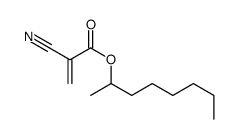
(2-Octyl cyanoacrylate,) is a high-performance cyanoacrylate (a class of organic compounds similar to the common “502 glue”). Due to its unique molecular structure and excellent biocompatibility, it is currently the core component of medical tissue adhesives (liquid “glue”). It is widely used in industrial and medical fields as a fast-curing adhesive or tissue adhesive.
| Chemical Name | 2-Octyl cyanoacrylate |
| Chemical Formula | C₁₂H₁₉NO₂ |
| CAS | 133978-15-1 |
| Appearance | clear liquid |
| Melting point | - |
| Boiling point | 297.6±23.0 °C |
| Density(ρ20), g/cm³ | 0.956±0.06 g/cm3 |
| Molecular Weight | 209.28476 |
| Solubility | It is readily soluble in polar organic solvents such as acetone and ethyl acetate, but is practically insoluble in common solvents such as water and ethanol. |
It is primarily used as a medical tissue adhesive (commonly referred to as “medical glue” or “liquid band-aid”). Due to its low toxicity, high flexibility, and excellent biocompatibility, it is widely used for closing surgical incisions, bonding minor wounds, and emergency hemostasis.
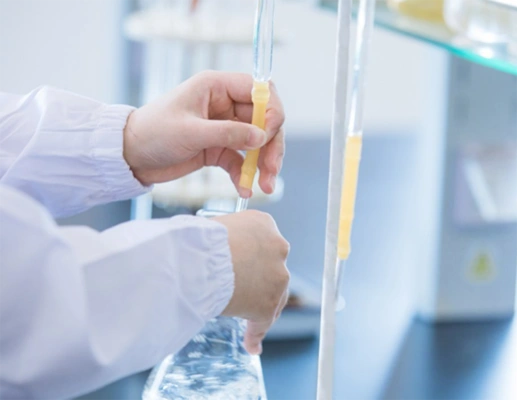
Temperature Control: The optimal storage temperature for unopened bottles is 2°C to 8°C. Avoid freezing to prevent damage to the bottle.
Moisture-Proof Sealing: Since trace amounts of moisture in the air can trigger rapid curing (polymerization), be sure to wipe the tube opening clean and tighten the cap after each use, and store the product in its original sealed container.
Light and Heat Sources: Avoid direct sunlight and high temperatures (prolonged exposure above 25°C will shorten the shelf life).
Container Material: We recommend using high-density polyethylene (HDPE) or glass containers to prevent material compatibility issues.
We Founded in 2005
We focuses on the research and development, production and sales of fine chemicals with broad market prospects
Our clients are located in more than 10 countries and regions around the world
 BINHAI

Copyright © 2026 by Weifang Binhai Petro-Chem Co., Ltd.